Uncovering the Next Generation's Hall of Fame

The Rock Hall Ends One of Its Worst Habits
It took 17 years, but the Rock & Roll Hall of Fame has decided to end their habit of treating its side categories like consolation prizes.
In a recent interview with Billboard, chairman John Sykes made the new policy clear:
In past years, some people who didn’t get voted in in the Performer category went on to receive one of these other awards.
If you’re nominated in the performing category, then you’re not considered in one of the special committees [that year]. In future years, though, they could be considered for the special committee categories, because those look at not only their relevance and their power as a performing artist and songwriter, but their influence on other artists and the genres included.
Setting aside the sloppiness of inducting performers in any category other than "Performer" in the first place, this new policy at least removes the awkwardness of telling inductees, "sorry, you didn't get the votes, but here's this other thing that (we swear) is just as good."
We first wrote about this in 2009 when Wanda Jackson got in through Early Influence despite having appeared Performer ballot that year.
If Wanda Jackson was going to be inducted whether she won or lost the vote, then why bother taking up that valuable spot on the ballot with her name?
The 2009 ballot was notable for having just nine nominees, so each ballot spot was especially precious.
Below is a list of all of the inductions that fell into this category:
- Wanda Jackson - Early Influence (2009)
- Freddie King - Early Influence (2012)
- Sister Rosetta Tharpe - Early Influence (2018)
- LL Cool J - Musical Excellence (2021)
- Judas Priest - Musical Excellence (2022)
The 2022 induction of Judas Priest was the final straw for the practice after Rob Halford expressed his mixed emotions about the honor in an interview with Ed Masley from the Arizona Republic:
Question: How did it feel to be given the Musical Excellence Award by the Rock and Roll Hall of Fame this year?
Answer: (laughs). You really want to know, Ed?
Q: Yes, I really want to know.
A: Why haven't they given us the the same title as all of our friends. Black Sabbath, for example. There's a different tag, isn't there?
Q: There is a different tag. That's why I wondered how you felt about it.
A: Well, yeah, I was pissed. I was a bit pissed. At the end of the day, does it matter? Some days, I go, 'No, it doesn't matter. We're in the Rock and Roll Hall of Fame. Be grateful. Shut the hell up.'
And then there are other days where I'm like, 'God damn, why did they give us the Musical Excellence Award?' Because it sounds very, you know, grandiose. 'The Musical Excellence Award, reserved for blah, blah, blah.'
And I'm like, 'Yeah, but I want to be with that bunch of musicians over there that have got the performance or whatever it is that they've got.' I don't know why they gave us the Musical Excellence Award. I have no clue.
I just felt a little bit like, 'Well, Sabbath got this. So why can't we have that?' Not that I'm jealous of Sabbath. I'm just talking about this tag that they give it.
Why do they put these tags on the damn thing? Why don't they go, 'Welcome. You're in the Rock and Roll Hall of Fame' and leave it at that.
A lot of our fans went, 'What the hell?' 'Oh, you know, they're a great band. They are an excellent band.' 'But why put the musical excellence? Why don't you give them like everybody else has got?'
And I'm like, 'Yeah, but I want to be with that bunch of musicians over there that have got the performance or whatever it is that they've got.' I don't know why they gave us the Musical Excellence Award. I have no clue.
Q: Yeah, I was disappointed that they gave you that because I thought…
A: Thank you. Thank you. Thank you.
Q: I thought, well, now, they're not gonna induct them for real, right? Because they took care of it with this Musical Excellence Award. Like, I'd rather them not have given you anything because then maybe next year you get inducted. That was my thinking.
A: My thinking exactly, Ed. I don't know. It's as though we got this far. We're, like, one step away, you know? I know it's silly, but it's just frustrating.
Q: It is. I feel for you. For real.
A: And on the other side, it's like, 'Great. Everybody else got that and we got shafted with this.' (laughs) Judas Priest are still the Rodney Dangerfield of heavy metal. They can't get no respect.
In 2023, when it appeared that the Rock & Roll Hall of Fame had finally decided to change their policy when Chaka Khan was kept off the ballot before going in as a Musical Excellence inductee, we noticed:
No artists jumped from the Performer ballot to the Special Categories in the same year! This may seem like a minor point, but last year Judas Priest failed to be inducted on the regular ballot for the third time but were named in the Musical Excellence category anyway. That felt a lot like a consolation prize in the minds of fans, and even Rob Halford. LL Cool J's induction was done the same way in 2021. This year, the Rock Hall kept Chaka Khan off of the ballot clearly knowing they were going to induct her no matter what. This is a far better solution and makes the Hall of Fame seem like they aren't insulting artists while they're trying to honor them. Credit goes to new Nominating Committee chairman Rick Krim for the new discipline (assuming he's responsible).
With this policy, the Rock Hall continues to make positive strides in fixing its once broken induction system.
A last minute plea to the Rock Hall Nominating Committee: If you're going to induct performers in the side categories because you know they can't get past the voters (like LL Cool J, Kraftwerk, and Judas Priest), please don't put them back on the ballot. #RockHall2023 #RockHall
— Future Rock Legends (@futurerocklgnds) January 23, 2023
.@alshipley on the @rockhall's "Consolation Prize Problem": "But Chic and LL Cool J are still not really in the Rock and Roll Hall of Fame and are still as deserving of a full induction as they were before." https://t.co/uoLLPprKIJ
— Future Rock Legends (@futurerocklgnds) February 2, 2022
Nominating Committee Adds 15-Year Term Limits

Back in February, when Alan Light dropped the news that the Rock & Roll Hall of Fame had implemented term limits for its Nominating Committee, there were still questions about the details of the rule and who it would impact. On a recent podcast, Light clarified a few things about the purpose of the change and the term limit:
So as we talked about, the committee instituted term limits, something that had been talked about, but was not there before, and I was very supportive of this idea. I'm not allowed to complain about being one of the first who got bounced because I was supportive of that because I do feel like after a certain number of years, anything that I felt or my colleagues felt really passionate about, we had our shot to make the case.
There's always going to be something [new] to come up, context is going to change. There's somebody you want to fight for. It's not that we're just dragging the same names to the table every year. But if there is something that you feel strongly about, after a while, you've had your opportunity. And you don't want the room to get too big and unwieldy, it's got to be a finite number of people. And so the notion that after having served 15 years, you cycle out and bring in younger members of the committee, people from different backgrounds, different perspectives, different sides of the industry, representing different genres.
And I think you saw that on the ballot this year looked different. We talked about it when the ballot came out and said, yeah, that's a reflection of different people determining what that ballot is and a different generation of people being brought into that room. And I think that's great. I think you want to evolve, you want to expand. It can't just be the same grizzled old guys coming in, bringing the same names up and fighting, having the same argument about them year after year after year. That just doesn't serve anybody well. And so out of that, I'm happy with what this looks like.
The key piece of news here is the limit of 15 years. That would imply that these members from the 2025 Nominating Committee were not welcomed back this year (this is unofficial):
- Bill Flanagan (32 years on the NomCom)
- David Fricke (27)
- Elysa Gardner (19)
- Alan Light (19)
- Rob Light (25)
- Steven Van Zandt (30)
It's safe to assume that Rick Krim (17) and John Sykes (30) are exempted from the new rule due to their elevated positions at the Hall of Fame.
Looking ahead, 2026 would seem to have been the final year for Cliff Burnstein (assuming he wasn't removed already). After 2027, Holly George-Warren, Meg Griffin, and Mike Kaufman will have hit their 15 years. In 2028, Tom Morello and Questlove will age out as well (museum president Greg Harris is likely exempt). For 2029 and 2030, no one hits their limits, but in 2031 Dave Grohl and Sandy Alouete will have their final meeting.
All of these term limit replacements are just the amount required by the new rule. Additional turnover may occur as usual.
A new wrinkle with this new rule is the impact it will have in the meeting. Will the preferences of nominators who are near the end of their term be given more deference in their final years? Look for more "personal picks" to slip through in the upcoming years.
Hopefully there will be new members who emerge that are as open about their selections as Alan Light, Questlove, Steven Van Zandt, and Tom Morello were. Over the years they have provided valuable insight into the induction process. Their loss is a serious setback for the already limited transparency we have.
The 2026 Rock & Roll Hall of Fame Inductees
The 2026 Rock & Roll Hall of Fame Inductees were announced live on American Idol on April 13th. The induction ceremony will be held on November 14th at the Peacock Theater in Los Angeles. ABC and Disney+ will air an edited version of the ceremony in December. There will be no live stream of the full ceremony.
| Inductee | Category | Group Members |
| Phil Collins | Performer | |
| Billy Idol | Performer | Billy Idol, Steve Stevens |
| Iron Maiden | Performer | Clive Burr, Paul Di’Anno, Bruce Dickinson, Janick Gers, Steve Harris, Nicko McBrain, Dave Murray, Adrian Smith, Dennis Stratton, Blaze Bayley |
| Joy Division/New Order | Performer | Ian Curtis, Bernard Sumner, Peter Hook, Stephen Morris, Gillian Gilbert |
| Oasis | Performer | Gem Archer, Paul Arthurs, Andy Bell, Liam Gallagher, Noel Gallagher, Tony McCarroll, Paul McGuigan, Alan White |
| Sade | Performer | Sade Adu, Paul Denman, Andrew Hale, Stuart Matthewman |
| Luther Vandross | Performer | |
| Wu-Tang Clan | Performer | RZA, GZA, Ol' Dirty Bastard, Method Man, Raekwon, Ghostface Killah, Inspectah Deck, U-God, Masta Killa, Cappadonna |
| Celia Cruz | Early Influence | |
| Fela_Kuti | Early Influence | |
| Queen Latifah | Early Influence | |
| MC Lyte | Early Influence | |
| Gram Parsons | Early Influence | |
| Linda Creed | Musical Excellence | |
| Arif Mardin | Musical Excellence | |
| Jimmy Miller | Musical Excellence | |
| Rick Rubin | Musical Excellence | |
| Ed Sullivan | Non-Performer |
Future Rock Legends Predicts the 2026 Rock & Roll Hall of Fame Inductees
The Rock & Roll Hall of Fame voting ended on March 25th and they will officially announce the class of 2026 on American Idol on April 13th. Future Rock Legends predicts the inductees in the Performer category will be:
- Wu-Tang Clan: The surprise leader among public ballots (see below) clearly benefit from a clear hip hop lane and the additional credentials from the solo careers of all of their members. Makes you wonder if they could have been inducted years ago (eligible since 2018).
- Phil Collins: His résumé appeals to a lot of different factions of voters so he should be able to coast his way in. The induction segment will be an emotional highlight of the ceremony.
- Oasis: The tidal wave of goodwill they earned with last year's tour should easily carry them into the Hall of Fame. Against all odds, we're guessing they will be willing participants in the ceremony.
- Iron Maiden: When the ballot was first released, we sensed this was the best shot they've ever had. The shortage of guitar bands to compete with and the increased number of votes only helps their case. There's widespread acknowledgement that the Rock Hall underrepresents metal and voters feel inclined to correct that. Then the Blaze Bayley thing made it a certainty. Too bad they won't be able to come to the ceremony due to their tour.
- Luther Vandross: In our early reaction post we called him "this year's Joe Cocker. An iconic voice that voters will immediately gravitate towards now that they have the chance." Still sounds exactly correct.
- Mariah Carey: This year Mariah decided to finally acknowledge her nomination by doing an interview with Variety (albeit doing the interview two weeks after the e-ballots come out isn't ideal). We take that as a positive sign that she and the Rock Hall are finally ready to get hitched.
- Billy Idol: The rumor is that Idol's management team has been actively calling voters to lobby for him this year. With the release of his documentary and the announcement of a summer tour (mysteriously having a "Rock & Roll Hall of Fame Presale" for Cleveland), the stars are aligned for Idol to announce 2026 inductee Idol.
Additional Notes:
- John Sykes has been open about using the side categories to help balance out the induction class. Based on the lack of pre-late 70's artists on the ballot, look for at least a few Musical Influence/Excellence inductees to represent those eras (i.e. no Salt-N-Pepa types this year).
- The new Nominating Committee made some interesting choices this year in selecting "one album" artists Jeff Buckley and Lauryn Hill. Both have some Hall credentials, but there are still so many better candidates from the 90s that are still waiting. It's baffling how these things happen until you play the Simulator!
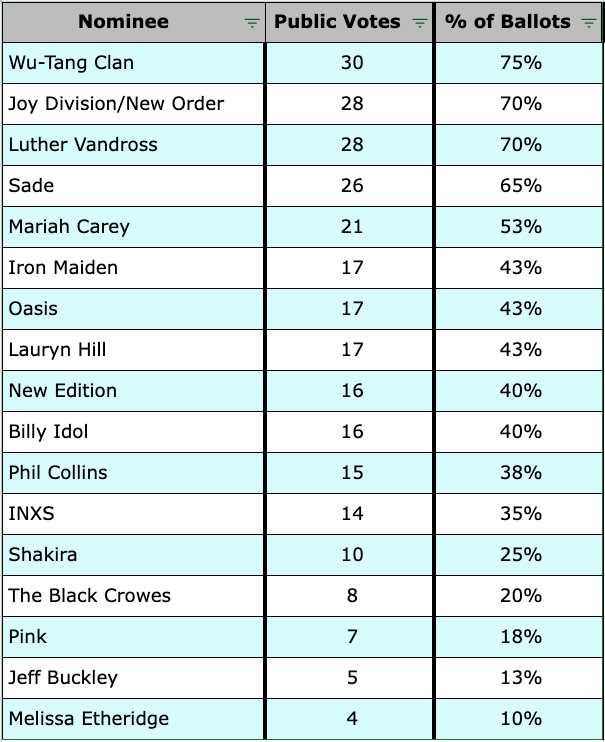
- Here are the public ballot standings that we tracked this year. The lack of enthusiasm for INXS and Shakira surprised us.
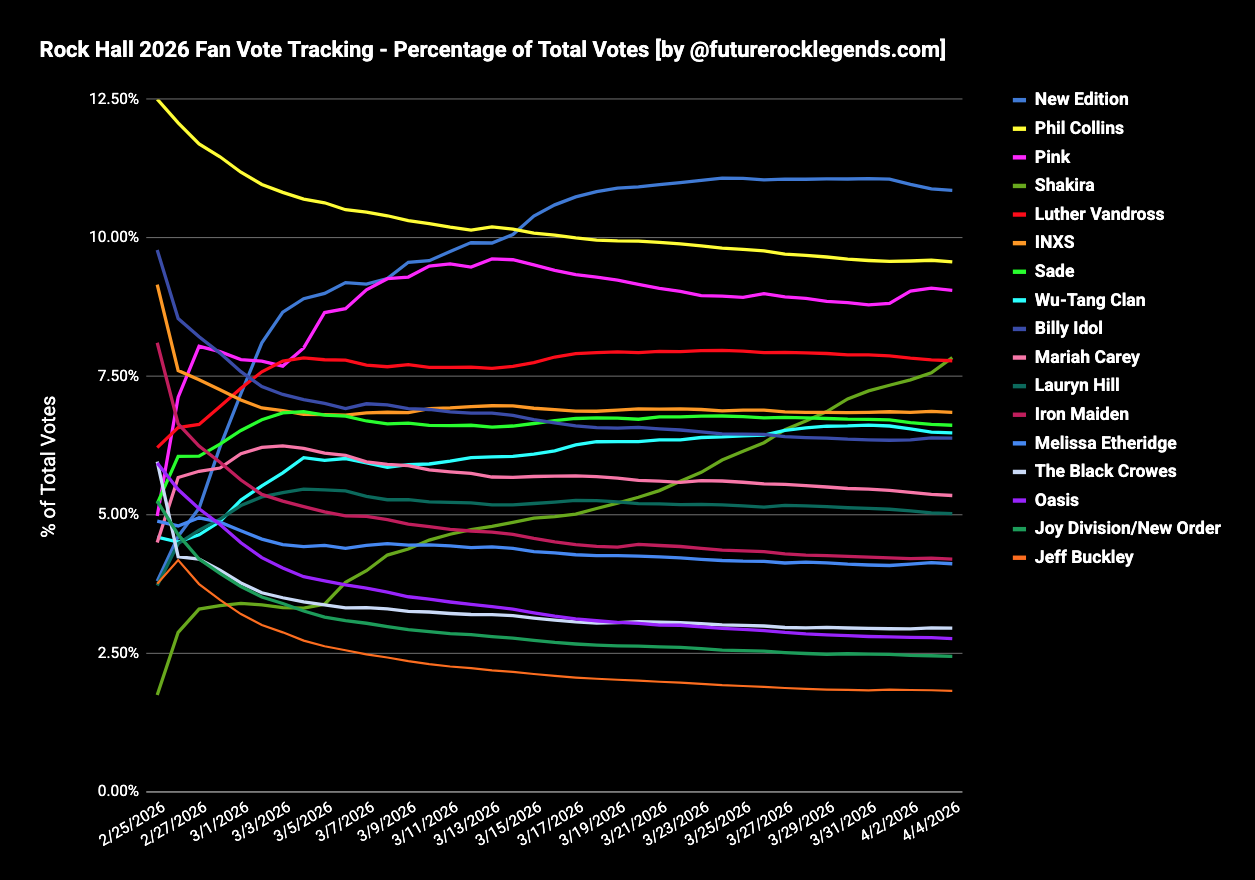
- New Edition won the Fan Poll and impressively received over 1 million votes in a short 38 days. Supposedly, in addition to social media, they used the Peter Frampton technique of posting a QR code at their concerts to encourage their fans to vote for them. The rest of the top 7 were Phil Collins, Pink, Shakira, Luther Vandross, INXS, and Sade. The last few weeks of voting were dominated by Shakira fans who took her from the bottom all the way up to fourth place. If the poll had stayed open as long as previous years, she may have given New Edition a run for the money.
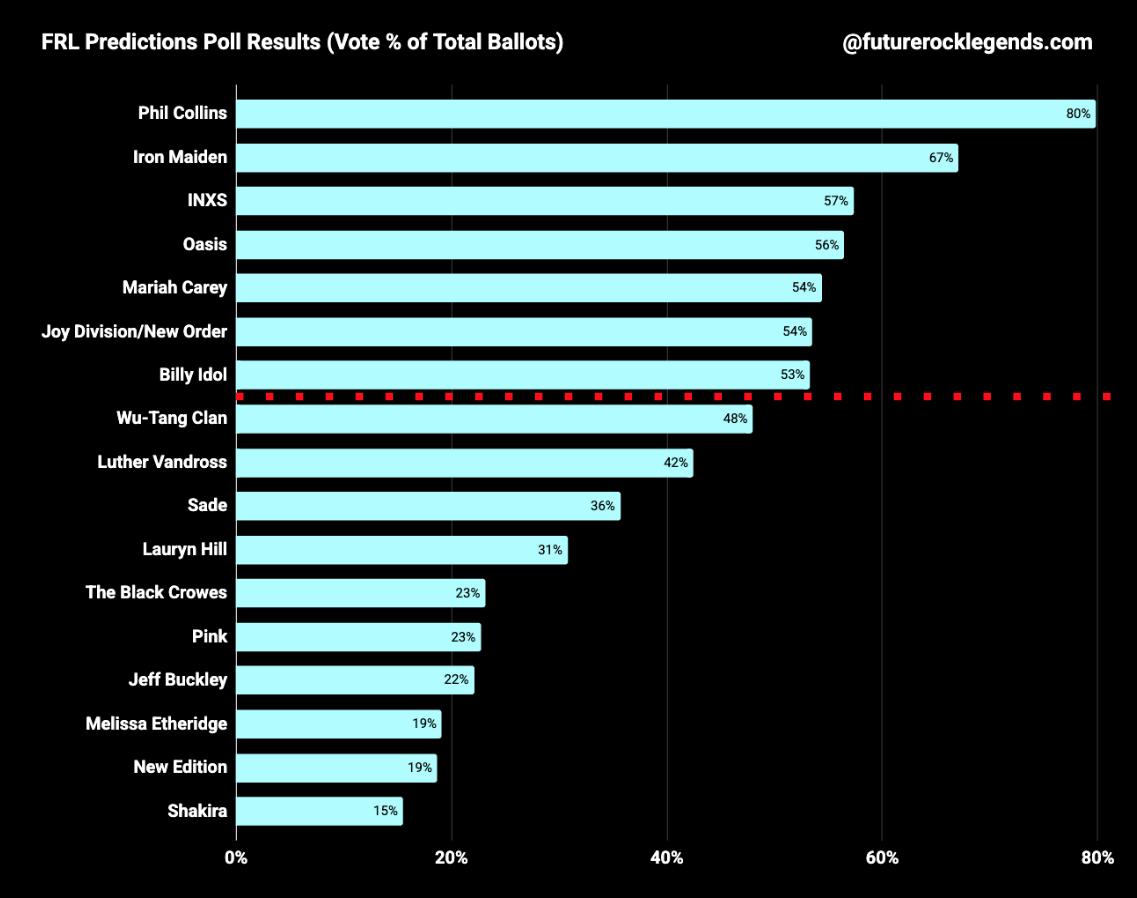
- What do our readers think is going to happen? The results from our own prediction poll (usually gets about 66% correct):
Who do you think will be inducted? Leave your thoughts below.
This post was made available a week in advance for our paid Patreon subscribers. Please consider becoming a member for early posts and exclusive content.
Since many have asked, if there's an 8th performer inductee, we'll predict it will be Joy Division/New Order.
Introducing the Rock & Roll Hall of Fame Induction Simulator
Every year, the Rock & Roll Hall of Fame induction season follows a familiar pattern. The ballot gets announced, the arguments start, and everyone has an opinion about who got snubbed, who doesn't belong, and what the committee must have been thinking when they put this thing together.
It's always been a mystery how some artists can be ignored for years but then suddenly appear on the ballot. Or why some artists "skip the line" and get nominated before their predecessors. What actually happens in Nominating Committee meeting?
We built a simulator to find out.
How It Works
The Future Rock Legends Induction Simulator puts you on the inside of the secret process. You're one of the committee members - seated somewhere around the table alongside the actual Nominating Committee members (with the legendary hoagie in the middle of it all).
The nominations go around the table two or three times. Each member gets to nominate one artist per pass. You can put forward someone new, or you can 'second' a nomination that's already on the table. The simulation weights the member nominations based on historical and predictive data. But upsets happen and dark horses get championed, just as you might see with any give ballot.
After nominations close, the committee votes. Each member picks up to 15 artists from the nominated pool and the top 14-18 artists become the official ballot.
Next, your ballot gets sent to the full Voting Committee - over a thousand artists, journalists, industry professionals, and past inductees - who make their picks from the nominees. You cast your votes alongside them. The results are tallied and the inductees are announced. Find out if the artists you nominated and voted for become Hall of Famers.
We made this simulation as realistic as possible. The eligible artists are drawn from our database, with each assigned a score that reflects their likelihood as a Rock Hall candidate. Artists who have appeared on previous ballots get a boost because the real committee often returns to familiar names. But not always! Every simulation produces a different ballot. Sometimes the obvious choices dominate, and sometimes you get a surprising groundswell around an artist you didn't expect.
Go Back in Time
You can simulate any Rock Hall class from 1986 to the present. The rules change by year - the number of voters, the voting rules, the eligibility window. (You'll be amazed at how stacked the potential ballots were 30 years ago.) It's all in the game.
When it's over, you can share your ballot and your induction class as an image directly from the game. (Help us get the word out!)
Go Play!
We've been testing this for a while now and honestly it's given us a new appreciation and insight into how the process can produce unexpected results. And even if you think you can push your personal picks through, there are dozens of other people in that room competing with you to do the same thing.
We'd love to see what ballots you're generating. Share your ballots and induction classes on social media, in the comments, or tag us on Bluesky or Twitter!
Billy Idol or Shakira? Who got counted in the Rock Hall Fan Vote?
Just after the 2026 Rock & Roll Hall of Fame nominees were announced, we picked up on the oddity of the nine day discrepancy between the deadlines for the Voting Committee and the Fan Vote.
What's odd about the shorter fan vote duration is that the Voting Committee's 1200 e-ballots are due on March 25th, a full nine days before the Fan Vote closes, which counts as the single remaining ballot. With electronic balloting, the Rock Hall will quickly know who is getting in and will begin making arrangements based on that induction class well before April 3rd. The only way that final ballot will have any impact at all is if there is a tie for the 7th spot, and in previous years the Rock Hall has been known to increase the number of inductees even when the numbers are close. It may still be a point of pride for fans to finish in the top seven, but it ultimately won't make a difference.
Former Nominating Committee member Alan Light apparently got word from Rock Hall officials that the actual Fan Vote deadline was the same as the Voting Committee.
On today’s Sound Up podcast, Alan Light says that the Rock Hall Fan Vote closed at midnight on March 25th (even though it is still taking new votes). He goes on to say that Shakira finished in the top seven, which was not the case on that date.
— Future Rock Legends (@futurerocklegends.com) March 31, 2026 at 10:22 AM
[image or embed]
Voting on the Rock Hall's website has remained open and should continue until midnight on April 3rd.
Why does this matter? From a practical standpoint, the impact of a single vote out of 1000 makes next to no difference in the results, especially when the Rock Hall has been known to be flexible in the number of inductees it selects when the votes are close. But let's pretend for a moment that the Hall of Fame had a rigorous vote counting process and the Fan Vote actually had some significance. Here are the Fan results at the time when voting closed for the official voters at Midnight on March 25th.
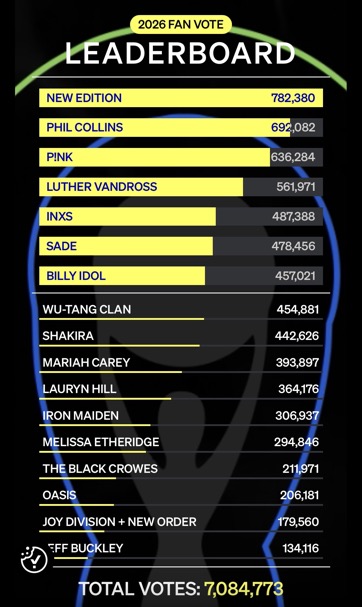
The top seven at this point would theoretically comprised the "Fan's Ballot" to be counted among the other completed ballots. Notably, Billy Idol was in the seventh spot, a position he would only hold onto for 18 more hours until Wu-Tang Clan overtook him in the standings. Within the next 12 hours, Wu-Tang and Idol were both passed by Shakira as she rocketed into the top seven. Shakira has continued her ascent to fifth place but it may all be for naught if the votes had already closed on March 25th.
So who got the vote, Billy Idol or Shakira?
We recognize all of this is trivial in the outcome of who gets inducted but it remains extremely important to the fans who have invested time and effort into the results. At the very least, the Rock & Roll Hall of Fame needs to clarify which seven artists were submitted on the Fan Ballot and provide an explanation for the discrepancy in the end-dates for voting.
The inductees are scheduled to be announced on American Idol on April 13th.
Flashback 2005: So How Do You Get Into the Rock Hall of Fame?
The article below was published on MTV.com in 2005 and provided a rare detailed look inside the Rock & Roll Hall of Fame induction process. The article is no longer online, so we are reproducing it here for posterity.
Music Geek: So How Do You Get into The Rock Hall Of Fame?
- by Jem Aswad
Every year since 1986, a handful of artists have been inducted with great fanfare into the Rock and Roll Hall of Fame, on the basis of the influence and significance of their music.
And every year, another list grows: The artists you'd think would be members, but aren't. The artists on that list — many of whom have been nominated but not voted in — include Black Sabbath, the Sex Pistols, Kiss, Iggy Pop and the Stooges, Grandmaster Flash, Lynyrd Skynyrd, Patti Smith, the New York Dolls, the MC5 and many others.
Is that because the bar of influence and significance is set so high that even those legendary artists don't qualify? Well, take a look at who is in: James Taylor, the Dells, the Flamingos, Jackson Browne, Billy Joel, the Young Rascals, the Ink Spots, the Lovin' Spoonful, the Four Seasons, the Orioles and — just inducted this year — soul singer Percy Sledge, whose one major hit occurred in 1966.
Without demeaning any of these artists, what the f---?
There's been no shortage of bellyaching on this subject, but there hasn't really been an examination of why it's happened.
We tried to find out what's up — and although we didn't get a definitive answer, we dug up a lot more dirt than we expected.
* * *
Let's start by taking a look at the rules.
Candidates for the Rock and Roll Hall of Fame are nominated by a committee of "music historians" — currently numbering 75 people, mostly executives and journalists — and are then voted upon by approximately 750 people (formerly around 1,000) from "across the spectrum of the music industry, including artists, broadcasters, writers, historians, producers and industry executives who are involved with making music," according to the hall's executive director, Suzan Evans.
Artists become eligible for induction 25 years after the release of their first record and are judged on the basis of "the influence and significance of the artist's contributions to the development and perpetuation of rock and roll," according to the hall's Web site. (Categories include Performers, Non-Performers, Early Influences and Sidemen; we'll just examine Performers.) The performers who receive the highest number of votes, and more than 50 percent of the vote, are inducted.
So how have the Sex Pistols and Black Sabbath, whose "influence and significance" are beyond question, been denied induction several times?
After speaking with hall of fame executives and several members of the nominating committee, two theories emerge.
One generally blames it on the baffling results that democracy, combined with a lack of education, can produce. Dave Marsh, a pioneering music journalist and nominating committee member, subscribes to this notion. "There are 25, maybe 50 people in the world who have paid attention to all of this music from the beginning, and I would say the majority of those people are represented on the nominating committee. We come up with a pretty good list every year, and that list is then [voted upon] by an electorate that is not very knowledgeable.
"I don't think there's anything inherently bad about democracy," he continues, "but I do think there's something bad about asking a broad group of people to make judgments on something when they're not very well informed. The hall of fame is failing in not educating them."
Although the hall sends out a CD every year containing two songs by each of the nominees, you do wonder why these 750-odd people are voting members if they need to be educated.
The hall's flaws are readily admitted by President Seymour Stein, who co-founded the hall and was inducted in the Non-Performer category this year.
"We're not perfect. We try to be so fair by having such a big nominating committee," explains Stein, who co-founded Sire Records in 1966. "It infuriates me sometimes. I wonder why [some of the artists named above] aren't in. I get frustrated too."
Indeed, judging from the heated conversations one can get into with members of the nominating committee, the debates are refreshingly geeky. Lines like "So you're saying that the Sex Pistols were a better band than the Dells?" are stated with all the fury of a divorce hearing.
That passion can play as much of a role in keeping artists out as it can in getting them in.
"Kiss is not a great band, Kiss was never a great band, Kiss never will be a great band, and I have done my share to keep them off the ballot," Marsh says. "And there's your problem: There's a wide discrepancy in points of view about who should be in, and there's an enormous field of candidates. There's nothing you can do to change the fact that other people's taste is different."
However, there's a second theory. According to two members of the nominating committee who prefer to remain anonymous, there's more at work here than fanboyism.
The main players in the hall are its primary officers — Stein, hall Chairman/Atlantic Records co-founder Ahmet Ertegun, Vice Chairman/Rolling Stone founder Jann Wenner, and Senior Vice President Jon Landau, who also manages Bruce Springsteen — and the list of inductees includes a strikingly large number of people they've worked with, people they've championed, and their personal friends. To a degree, this is inevitable — the world of multi-decade rock and roll veterans is pretty small — but one anonymous member says a line is being crossed.
"These people really do love rock and roll, and they want to push the things they like," nom-anon #1 says. "But there are also personal and financial agendas as well — and even personal vendettas.
"Let me give you an example," he continues. "[A major hall of fame officer] wanted me to get a favor from an artist, and it was above and beyond what this artist was willing to do, and rightfully so. I went back to this guy and said, 'Look, he doesn't wanna do it.' And he said, 'Well, you tell him he's never gonna get into the hall of fame.' To me, that's an example of how these guys run the hall."
He also feels that the befuddling exclusion of the Sex Pistols may be due to a personal slight. "Whenever the Sex Pistols come up, the attitude is, 'No, we're not putting them in!' " he says. "Somewhere along the line, did John Lydon tell [one of the officers] that he's a big fat pig? I don't know if that happened, but I wouldn't be surprised if it did, because when the Sex Pistols are brought up, he goes ballistic."
"Why do you think Patti Smith isn't in?" nom-anon #2 says, alluding to an alleged beef between the legendary punk singer and one of the hall of fame's officers. "Don't you think that's odd?"
By the same token, he says the personal interests that have kept certain artists out have gotten others in.
"There are forces at work there which I hesitate to call political, but I will say are political or personal, that put voters on [the nominating committee]," says nom-anon #2. "When the Talking Heads and Ramones were inducted at the same time [in 2002] — my, my, there couldn't be any coincidence about Seymour Stein [who signed both artists] being the head of the hall of fame?"
"I did not nominate the Talking Heads, the Ramones or [Sire artists] the Pretenders," Stein says. "I voted for all of them. However, I have one vote in the nominating committee and one vote in the [voting committee]."
Hall Executive Director Evans also denies the role of personal favoritism in the process. "The board of the museum is made up of the heads of the record companies, top managers, artists. I think everyone necessarily has relationships with people who want to be inducted, [but] I really don't think that relationships with members of the board have ever gotten anyone into the Rock and Roll Hall of Fame. Obviously we're going to know people, but the nominating committee is a pretty purist group of writers and critics — the majority of them are journalists — and I really doubt that they are swayed by anybody coming in and saying, 'I want you to induct so-and-so.' "
Evans attributes the glaring exclusions to the vagaries of the voting committee. "I know sometimes the voting results seem to be more purist than populist," she says. "But I can't pretend to know why people vote the way they do, at all. Everyone has different tastes in music, and I think every genre in rock and roll is well represented in both our nominating committee as well as the larger voting group. And if you listen to any of our historians' discussions in the nominating procedure, you would hear a wide variety of tastes and judgments as to who is influential and who should go in before whom, depending on that person's personal preferences of the rock and roll genre — one person might put a name into a nomination and another might say, 'That's not rock and roll!' I get that all the time."
So we're to believe that more than half of the hall's voters, and its nominating committee, feel that Kiss and Sabbath aren't significant or influential enough to be in the hall of fame?
Indeed, nom-anon #1 says, "With Kiss and Black Sabbath, I don't believe those are conspiratorial cases. I think [the nominating committee members are] very split and very acrimonious about them. Kiss is brought up every year, and some people feel very passionately that they should be in, and some people feel very passionately that they shouldn't, based on the fact that they hate Kiss, and it's a similar thing with Sabbath. Some people think the hall of fame is invalidated by not having them in there, and other people just think they stink."
Lydon and members of Black Sabbath have spoken bitterly about the hall of fame. Neither group responded to requests for comment — Sabbath's publicist even said "the band as a whole is no longer interested in commenting on the hall of fame" — but they don't really need to. Lydon has called the hall "the place where old rockers go to die," and both Ozzy Osbourne and guitarist Tony Iommi have been outspoken in their displeasure at Sabbath being passed over.
After the group — which has been nominated and not inducted three times — was passed over in 1999, Osbourne issued a press release asking that the band be removed from consideration. "Just take our name off the list," he said. "Save the ink. Forget about us. The nomination is meaningless, because it's not voted on by the fans. It's voted on by the supposed elite of the industry and the media, who've never bought an album or concert ticket in their lives, so their vote is totally irrelevant to me. Let's face it, Black Sabbath have never been media darlings. We're a people's band, and that suits us just fine."
Interestingly, none of the people interviewed for this article said they felt those comments had played a role in keeping Sabbath or the Pistols out of the hall.
* * *
While the members of the nominating committee are often lobbied extensively by managers, executives and artists themselves (the list of people on the nominating committee is made public; the voting committee is not), all agree that it doesn't make much difference. "I think Chicago sends a lot of things, and the Moody Blues and the Doobie Brothers, but no one has bought me lunch or sent me a case of champagne," says nom-anon #2. "I get a lot of letters, but I'm not influenced by them."
However, the lobbying within the committee — where one person's influence can get an artist nominated — is another matter. "In the meeting itself, there is some heated debate," says nom-anon #1. "And there'll be someone who's really an advocate for somebody — year after year after year, they'll hone their arguments and make their case. Every year [one nominating committee member] was bringing up ZZ Top. I honestly believed that they would never get in or get past the nominating committee, but he was indefatigable and he got it through. There was a lot of resistance, but he overcame it. It happened just because of him."
Some members may defer to other members' greater knowledge of a genre, which goes a long way toward explaining the presence of '50s acts like the Flamingos and the Ink Spots in the hall. "My hunch," says veteran journalist Bud Scoppa, a member of the nominating committee since 1998, "is that some of the more vintage acts that have gotten in, particularly in doo-wop, have been little heard by the majority of voters, but tastemakers don't want to think of themselves as ignorant or — more crucially — biased. Seymour, who does know this stuff, has been a big supporter of the doo-wop groups, and I suppose it's possible that some voters defer to his greater knowledge of the dim past.
"But as for the [absence of certain] punk bands," he continues, "I don't get it either."
Although both anonymous members say the nominating committee's nominations are "pretty true to what we've voted on," there have been a couple that don't add up.
"Sometimes, in one or two cases, [the results] don't necessarily feel right to me," says nom-anon #1. "There's usually a moment at the very end of the meetings [where it's like] 'This doesn't quite make sense, maybe one person out of the ones we nominated didn't really have that many votes,' but I have no proof of that."
* * *
So what you've got is a hall of fame that no one seems to be happy with, yet no one seems to be working to fix, either. After aging prog-rockers Jethro Tull won the Grammy for Best Heavy Metal band — over Metallica — in 1989, the RIAA underwent at least an outward revision of its procedures and established some new categories. Nom-anon #2 feels the hall of fame is beyond saving.
"It's already a total joke," he says. "The more the 'institution' disgraces itself with Percy Sledges [and other marginal inductees], the less interesting it will be, and in two or three years, nobody will care anymore."
But for nom-anon #1, there's a simple solution.
"I walk into this room and it's full of old men," he says. "There's no young people, there's like two women, there's no people of color — well, I shouldn't say none, but there's a preponderance of old men. I look across the table and I see people sleeping — I'm just waiting for someone to die at the table — and they're making the decisions! They have their point of view, and it's a legitimate point of view that should be represented, but it's the whole thing."
Stein, however, attributes the hall's flaws to the impossibility of quantifying art. "Rock and roll is a hybrid," he says. "You ask 50 experts what it is and you'll get 50 different definitions. It's not baseball or basketball, where there are stat sheets. There are no scorecards, it keeps changing all the time.
"From his deathbed, Johnny Ramone sent me a letter advocating that Cat Stevens get in, and he got John Frusciante from the Red Hot Chili Peppers and Eddie Vedder to send letters saying the same thing," he continues. "From his deathbed, he said that — and there couldn't be anything more opposite the Ramones than Cat Stevens. It just goes to show the kind of music people do is not always indicative of our taste. I think the age of the voters has a lot to do with it — obviously we're influenced by the things we loved when we were 13."
Yet despite Stein's touching words, what all of this seems to indicate is that, with the exception of a strikingly large number of comparatively young Rolling Stone staffers, the majority of the hall's nominating committee — the members of which are overwhelmingly over 50 — has no idea what it felt like to be 13 and hear the Sex Pistols or see Kiss on TV for the first time, or at least they're failing to translate their own experiences to it. It's very different to experience music as a pure fan, especially a young one, than it is as a seasoned, if not jaded, music executive or journalist; this, despite the obviously juvenile arguments that go on during the meetings.
"Are you a voting member?" Stein asks. "Let me send you the materials. We can use a few more voters. Maybe you can help!"
Where is Coldplay?
If you were going to create a first ballot Rock & Roll Hall of Fame inductee in a lab, an artist with critically acclaimed albums, worldwide popularity, huge hit songs, and an all-time live performer, it would look exactly like Coldplay. Despite being eligible now for four years, they still haven't been nominated. What's going on here?
Let's rewind for a moment back to before the ballot was released in 2023. At that point, artists were eligible 26 years after their first recording (25 years from the nomination date, but the induction year was traditionally in the following calendar year — yes, it was confusing). Coldplay released their first EP in 1998, so they had been expected to be eligible in 2024. When the 2023 ballot was released, it was revealed that the Rock Hall decided to formally shift its calendar forward a year so eligibility could be calculated with a clean 25 years to date of the ceremony. This suddenly made artists who released their first recordings in 1997 and 1998 both first year eligible. For example, Missy Elliott's first release was 1997 and The White Stripes had theirs in 1998. Both became nominees in their first eligible year. Coldplay, who was now suddenly eligible, did not get nominated.
At the time, it may have been easy to attribute Coldplay's snub to the Rock Hall's unexpected rule change, but in any case, they would no longer get the distinction of being "first ballot Hall of Famers" like many of their peers.
Fast forward to 2024 and nearly everyone who pays attention to the Hall of Fame was predicting Coldplay to be nominated. When the ballot was officially revealed, Coldplay wasn't on it, but someone left a clue:
On this episode, it's discussed that Questlove's IG story announcing the Rock & Roll Hall of Fame nominees originally included Coldplay until he took it down 24 hours later 👀 #RockHall2024 https://t.co/USDiIMxmYx
— Future Rock Legends (@futurerocklgnds) February 16, 2024
Questlove, one of the most well known members of the Nominating Committee, had created his own Instagram story revealing the 2024 ballot. The video included the 15 official nominees plus Coldplay. Apparently sometime between the Nominating Committee meeting and the official reveal, Coldplay had been removed from the ballot and word had not gotten back to Questlove.
The prevailing theory at the time was that since Coldplay was still in the middle of their multiyear Music of the Spheres world tour, they asked to be removed from consideration, and the Rock Hall complied.
Okay, but how about 2025? Again, no nomination, despite having a clear calendar in the Fall around the time of the induction ceremony. Maybe the tour conflict isn't the reason.
And now here we are again in 2026 with another group of nominees and Coldplay is still mysteriously absent, even with zero scheduled tour dates.
Does the Rock Hall hate Coldplay? Does Coldplay hate the Rock Hall?
The only plausible explanation for the lack of a nomination comes from the 2026 ballot reveal episode of the Who Cares About the Rock Hall podcast, where host Joe Kwaczala relays a rumor he's heard about their candidacy:
Kristen Studard: [The fact] that Coldplay has not been on a ballot is crazy to me because they are such a Rock Hall type band.
Joe Kwaczala: I've told you my theory of that. They have announced that they are working on their final album, and that they are powerful enough to [tell the Rock Hall], "we would like to include an induction as part of our farewell campaign."
Perhaps that once the possibility of being a first ballot Hall of Famer like the all-time greats passed them by, Coldplay decided to take their time with it all. In any case, the Rock Hall will be there waiting with open arms whenever Coldplay decides they want to be inducted.
Should artists be able to dictate the terms of their own induction to the Hall of Fame? With other big names becoming eligible soon, it's a risky precedent to set.
The Rock Hall Adds Term Limits for the Nominating Committee, and Other Quick Thoughts on the 2026 Ballot
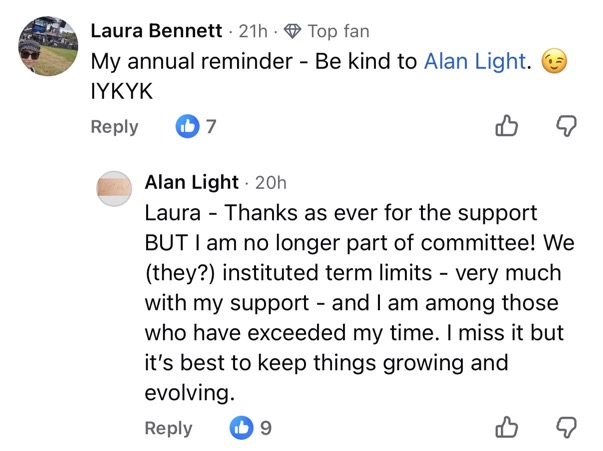
- Nominating Committee Term Limits: In a Facebook thread about the nominees, Alan Light revealed that after 19 years, he was removed from the Nominating Committee because term limits have been introduced. To Light's credit, he supports the change, after having previously lauded the value of having new voices at the table. Adding term limits was one of our 10 suggestions for fixing the Rock Hall from 2019. It's unknown at this point exactly how many members of the Nominating Committee turned over from last year, but it is likely in the 7-10 range.
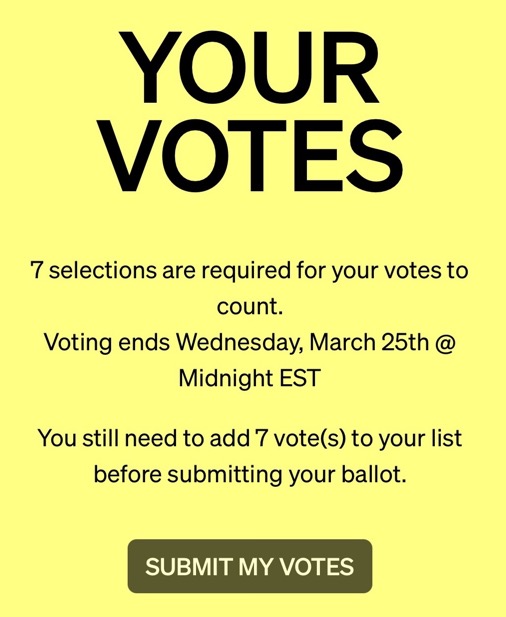
- Voting Rule Changes: After the switch to sending out electronic ballots via email last year, the Rock Hall made another significant change to the process. They now require their official voters to vote for exactly seven names. Up until this year, the Rock Hall had no minimum number you had to vote for. Most would vote for the maximum, but many voters decided to only support the names that truly met their threshold of being a Hall of Famer. Since 2024, when the Rock Hall increased the maximum votes from five to seven, over 25% of public ballots were returned with less than seven names checked.
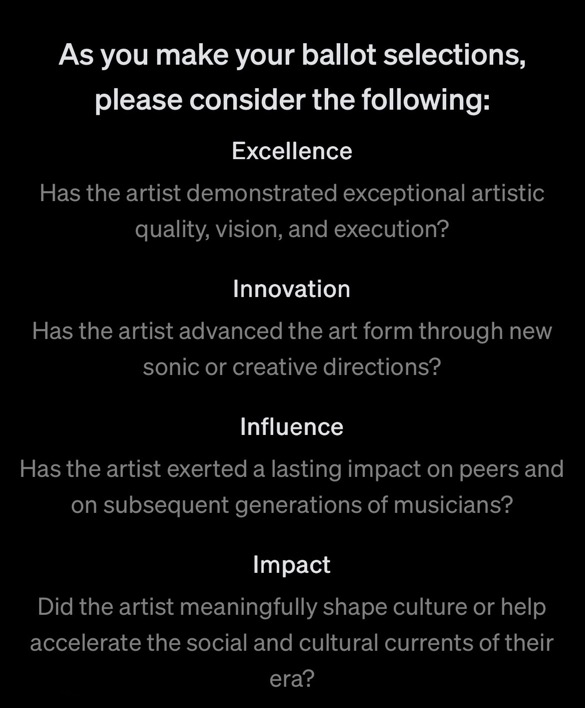
- Explicit Voting Criteria: Official voters now receive the following screen before reviewing the ballot. The Rock Hall has been criticized lately for valuing commercial success and industry connections over artistic merit. Their reminder to voters to consider "Excellence, Innovation, Influence, and Impact" is a return of to their roots when they used to state that popularity, "gold records, number one hits, and million sellers are really not appropriate standards for evaluation."
- Fan Vote Changes: The Rock & Roll Hall of Fame's popular Fan Vote is back this year, but the overall duration of the voting has been cut from 87 days in 2023, to 69 days in 2025, to now just 38 days in 2026 (it closes this year on April 3rd). We have tracked this poll daily since 2013, and it consistently reveals the ultimate winners after about 2 weeks of voting. Needlessly extending it longer just takes advantage of fans' time who are eager to support their favorite artists no matter what. This is a great change.
- Fan Vote Becomes Even More Meaningless: What's odd about the shorter fan vote duration is that the Voting Committee's 1200 e-ballots are due on March 25th, a full nine days before the Fan Vote closes, which counts as the single remaining ballot. With electronic balloting, the Rock Hall will quickly know who is getting in and will begin making arrangements based on that induction class well before April 3rd. The only way that final ballot will have any impact at all is if there is a tie for the 7th spot, and in previous years the Rock Hall has been known to increase the number of inductees even when the numbers are close. It may still be a point of pride for fans to finish in the top seven, but it ultimately won't make a difference.
- The Ballot Announcement: This was discussed in the John Sykes Report Card where we gave him an "F" on this topic, but the Rock Hall failed to even tease the ballot announcement date in advance on social media. Their fan vote page briefly displayed a "countdown clock" to the announcement in its code which was subsequently removed once it was discovered and never returned. The media embargo quietly lifted at 6am EST on Wednesday but the Rock Hall had given up their exclusivity and control over the announcement.
- Induction Ceremony Location: The mystery of the host city for the 2026 ceremony is still under wraps. Cleveland is expecting it, but John Sykes has other ideas.
Much more to come about this year's class, and we'll reveal a few early thoughts about each of the nominees over on our Patreon later this week. Follow our Bluesky feed on our home page to keep up with the latest news and analysis.
The 2026 Rock & Roll Hall of Fame Nominees
The 2026 Rock & Roll Hall of Fame Nominees were announced at 6:00am EST on Wednesday, February 25th. Inductees will be revealed in April, and will be honored at a ceremony in the fall.
| Nominee | # of Noms | Group Members |
| The Black Crowes | 2nd | Jeff Cease, Johnny Colt, Marc Ford, Steve Gorman, Eddie Harsch, Chris Robinson, Rich Robinson |
| Jeff Buckley | 1st | |
| Mariah Carey | 3rd | |
| Phil Collins | 1st | |
| Melissa Etheridge | 1st | |
| Lauryn Hill | 1st | |
| Billy Idol | 2nd | Billy Idol, Steve Stevens |
| INXS | 1st | Michael Hutchence, Kirk Pengilly, Garry Gary Beers, Andrew Farriss, Jon Farriss, Tim Farriss |
| Iron Maiden | 3rd | Clive Burr, Paul Di’Anno, Bruce Dickinson, Janick Gers, Steve Harris, Nicko McBrain, Dave Murray, Adrian Smith, Dennis Stratton, Blaze Bayley* |
| Joy Division/New Order | 3rd | Ian Curtis, Bernard Sumner, Peter Hook, Stephen Morris, Gillian Gilbert |
| New Edition | 1st | Ricky Bell, Michael Bivins, Ronnie DeVoe, Bobby Brown, Johnny Gill, Ralph Tresvant |
| Oasis | 3rd | Gem Archer, Paul Arthurs, Andy Bell, Liam Gallagher, Noel Gallagher, Tony McCarroll, Paul McGuigan, Alan White |
| Pink | 1st | |
| Sade | 2nd | Sade Adu, Paul Denman, Andrew Hale, Stuart Matthewman |
| Shakira | 1st | |
| Luther Vandross | 1st | |
| Wu-Tang Clan | 1st | RZA, GZA, Ol' Dirty Bastard, Method Man, Raekwon, Ghostface Killah, Inspectah Deck, U-God, Masta Killa, Cappadonna |
* - Blaze Bayley was added a few weeks after the nominations were first announced.
The Defining Artists of Each Decade
As you might expect, the percentage of "defining artists" inducted in the Rock Hall increases the further you go back in time (66% of 1950s artists have been inducted). The Rock Hall has taken some heat for being slow to induct 90s artists, but looking at who made an impact during that decade, it doesn't look so bad. (There is still a lot of work to do of course.)
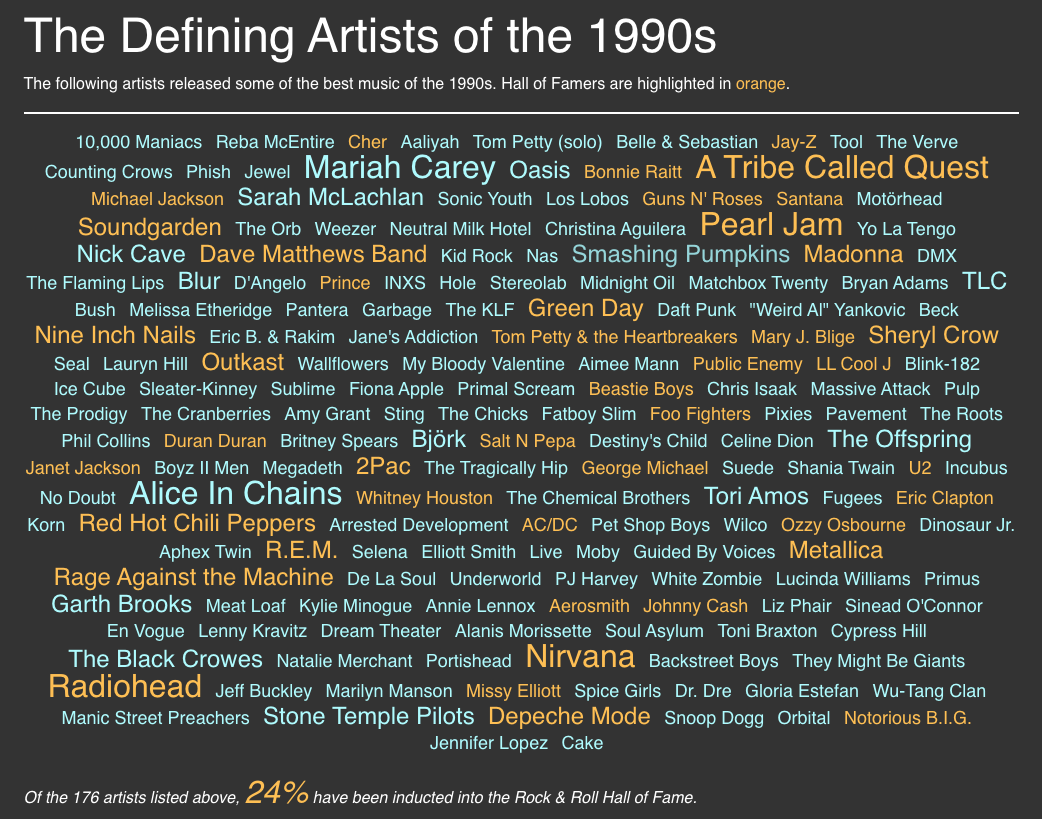
In addition to the defining artists, we've listed a list of albums and songs using data pulled from other parts of our site. It may not have everything, but it provides an overall flavor for what remains relevant from that decade.
Here is a link to the list of decades.
The Rock & Roll Hall of Fame Nominating Committee should look at Rolling Stone's Top 500 Albums and Songs Lists
Rolling Stone's has published three primary lists that are a decent attempt at establishing a rock & roll canon:
- The 100 Greatest Artist of All-Time (previously The Immortals)
- The Top 500 Albums of All-Time
- The Top 500 Songs of All-Time
The reason those lists are so significant and should be taken seriously by the Hall of Fame is not that they came from Rolling Stone, but because of the methodology in which they were constructed. Here is their explanation for the 2020 Albums list:
To do so, we received and tabulated Top 50 Albums lists from more than 300 artists, producers, critics, and music-industry figures (from radio programmers to label heads). The electorate includes Beyoncé, Taylor Swift, and Billie Eilish; rising artists like H.E.R., Tierra Whack, and Lindsey Jordan of Snail Mail; as well as veteran musicians, such as Adam Clayton and the Edge of U2, Raekwon of the Wu-Tang Clan, Gene Simmons, and Stevie Nicks.
So these lists were not just the opinions of a handful of Rolling Stone writers and editors, but a compilation of 300 voices, many of whom are likely Rock Hall voters. Of course these lists aren't perfect, but no one else has done anything quite like it.
In 2023, Rolling Stone decided to throw that credibility in the trash and reworked the 2020 list without outside input:
In the three years since Rolling Stone rolled out the all-new, fully revamped version of our 500 Greatest Albums list, artists like Beyonce, Bad Bunny, and Taylor Swift have all released undeniable classics. So we’ve updated the list, adding those albums while making a few other tweaks.
By updating the list at the whims of their editors to include current albums (thereby kicking off actual classics that had earned their way onto the list), they undercut the importance of their lists. (It's that reason we don't include their updates on our site.)
Anyone can create a "greatest" list, but the methodology of the voting matters! That's why the honor of being inducted into the Rock Hall as a Performer inherently means more than being brought in one of the side door categories. As a Performer you were inducted by your peers! To get in one of the other categories it just takes a majority vote of something like seven people, likely to "balance" out the ceremony. It's ridiculous to argue that both honors carry equal significance.
Back to the Rolling Stone lists, there are two new Patreon-exclusive pages with the entirety of the "good" lists and their Rock Hall status.
- Rolling Stone's Top 500 Albums of All-Time (2020 version)
- Rolling Stone's Top 500 Songs of All-Time (2021 version)
When developing the ballot this year, the Nominating Committee could do much worse than just taking the top eligible artists from the Rolling Stone albums list and calling it a day.
- D'Angelo
- Fiona Apple
- Joy Division/New Order
- Pavement
- Big Star
- Erykah Badu
- John Coltrane
- De La Soul
- Oasis
- Sade
- PJ Harvey
- Bjork
- Lucinda Williams
- Sonic Youth
- Daft Punk
- Pixies
In any case, we're looking forward to the 2026 ballot.
Voice Your Choice Ballot Impact
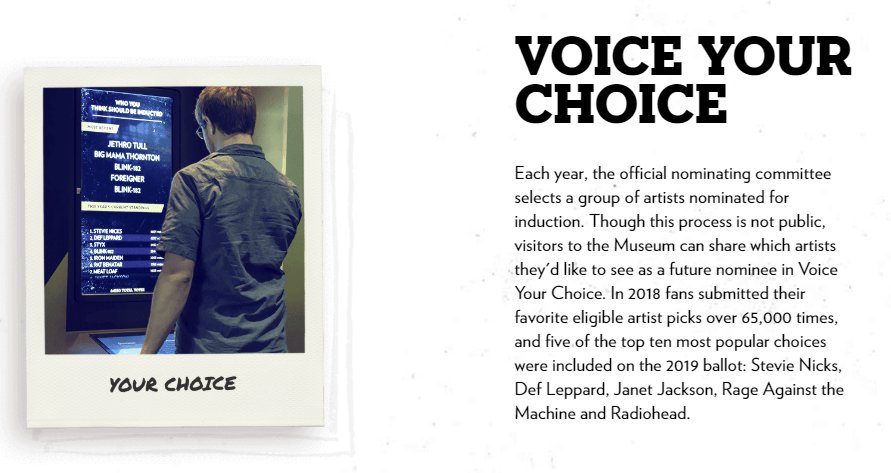
The Rock & Roll Hall of Fame introduced voting kiosks in its museum in 2018 before the 2019 ballot was released. Previously, fans had no formal public method of reaching the Nominating Committee with their opinions about who should be inducted.
The kiosk famously had early success with the top two artists getting inducted in 2019 (Stevie Nicks and Def Leppard), and museum president Greg Harris was quick to attribute the Voice Your Choice kiosk results as having some impact when creating the ballot.
Since then, Rock Hall leaders haven't talked much about it, but their website now says that the top 100 results are provided to the Nominating Committee for their consideration. With that in mind, and with the 2026 ballot right around the corner, it is a good time to look at various snapshots of the results of the years to see how much they correlate with actual ballot appearances and inductions.
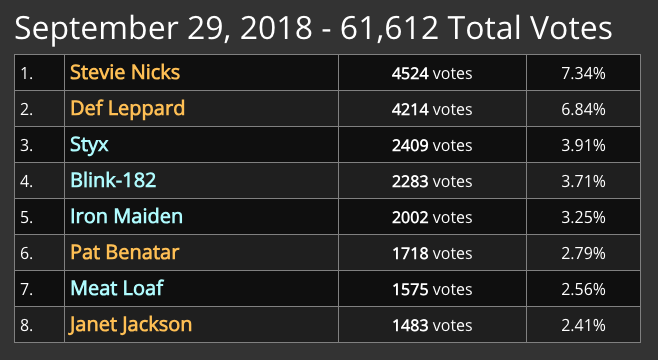
Enjoy the new page on our site dedicated the strange little kiosks at the museum, and fingers crossed for fans of any of the artists in the current top 10: Linkin Park, Iron Maiden, P!nk, Alice In Chains, Styx, "Weird Al", Boston, Mötley Crüe, Weezer, and Blink-182. The full top 100 is available here.
Grading John Sykes After Five Induction Classes

John Sykes took over as Chairman of the Board of the Rock & Roll Hall of Fame Foundation on January 1, 2020. (His first start-to-finish induction class was 2021.) It's been five full years, so let's sharpen a pencil and fill out his report card to see how he's performed in various subjects:
- Increasing diversity on the Nominating Committee: In Sykes's tenure, the number of women on the Nominating Committee has steadily increased from 26% when he took over, to an all time high of 45% in 2025. Grade: A-
- Increasing diversity on the Board of Directors: Sykes inherited a Board with two women out of 26 members (8%). The Board now has seven women out of 28 (25%) and a far more racially diverse group. Grade: B
- Live streaming the induction ceremony: In 2023, the Hall of Fame moved the induction ceremony broadcasts from HBO/HBO Max to Disney+ where the ceremonies were able to return to an unedited live streaming format. As part of this deal, ABC broadcasts an edited version of the ceremony annually on New Year's Day, reaching the free TV audience for the first time. Grade: A
- Reducing the backlog by increasing the size of the induction classes: In the five years before Sykes took over the Hall was averaging just 6.8 inductees per induction class. Since 2021, that has doubled to 13.8. There are still a staggering number of deserving artists but it could be so much worse. Grade: A+
- Fixing the voting system: Beginning in 2024, the Rock Hall adjusted their voting rules to allow their official voters (and the fans) to vote for up to seven artists instead of the previous five. This was done to reflect the larger performer classes the Hall of Fame had been inducting. While still not perfect, this was a step in the right direction. Grade: B+
- Aligning the emphasis of the Fan Vote with its actual importance: Every time a popular artist gets nominated, their fans flood the Fan Vote hoping to guarantee their induction but get disappointed when it doesn't happen. The Rock Hall hasn't adjusted the emphasis they place on it nor the weight it is given in the actual tally. Grade: D
- Bringing clarity to the Special Categories: In an attempt to broaden the definition of the Musical Influence category to go beyond the original pre-Rock & Roll-era intent, the Hall inducted Kraftwerk and Gil Scott-Heron in 2021. They succumbed to the temptation of using Musical Excellence and Musical Influence as brute-force mechanisms to clear congested ballot lanes, and in doing so completely muddied the definitions of the categories and rendered them meaningless. Grade: F
- Keeping his promise to Cleveland to bring the induction ceremony there every two years: In 2021, he said that was the plan but it hasn't happened yet. The Museum and Cleveland desperately want it, but Sykes's public comments have shifted to keeping the current three-year rotation. Grade: D
- Increasing or maintaining the prestige of an induction: Under Sykes, the Hall of Fame self-proclaimed the inductions "Rock's Highest Honor," clearly trying to mimic the Grammys' "Music's Biggest Night" tagline. Even during the Jann Wenner era, the honor of being inducted was been questioned by some artists, and that has continued in recent years with notable friction with inductees like Chubby Checker, Carol Kaye, Foreigner, Rage Against the Machine, and Todd Rundgren. Additionally, performers who get inducted in the side categories often publicly question what that is all about. As much as Sykes proclaims that all inductees are equal, the honor of getting in through the ballot process as a performer while being voted on by other inductees (your influences and peers, plus "the fans") is still the preferred avenue for most artists. Grade: C
- Improving communication of the ballot and inductee announcements: From creating no buzz around the ballot announcement, to releasing the nominees on the Saturday before the Super Bowl, by dropping the Sirius-XM partnership, to having American Idol half-ass the inductee announcement, it has been nothing but a series of failures. Grade: F
- Expanding the definition of "rock and roll": Beginning in 2005, Jann Wenner began the push to get hip hop artists included in the Hall of Fame. Twenty years later, that has become a settled fact at this point. In 2022, the Dolly Parton nomination as a performer broke the unspoken separation between the Rock Hall and the Country Music Hall of Fame. The Rock Hall had dabbled with country artists in the past, but usually in the context of inducting them as influences. Willie Nelson went in easily the following year, so it seemed that other country stars could soon follow. That hasn't happened yet and the relationship of the Rock Hall and country music is still a bit up in the air. Sykes did broaden the Rock Hall's focus to nominate a global superstar like Mariah Carey who didn't get any attention from the Hall of Fame for her first 8 years of eligibility. Other popular "icons" like Cher, Carole King, Lionel Richie, and Tina Turner all were able to finally get noticed under Sykes. Grade: B
- Keeping the Rock Hall induction ceremonies unique: There are three different eras of induction ceremonies: The first was the 1986-2011 ceremonies which were the private Waldorf-Astoria black tie affairs (there were a couple of exceptions). The TV cameras were mostly an afterthought and the focus stayed on the inductees. The 2012-2020 HBO era made public ceremonies permanent and increased the production value and star power, but not at the expense of keeping the focus on the inductees. In the John Sykes era since 2021, it often feels like the inductees aren't the primary focus. Tribute performances are booked for artists who would prefer to perform themselves. Inductors are selected for their name or industry status rather than their connection to the honoree. The production values have remained high, but the reliance on "award ceremony regulars" gives the ceremonies a new blandness. The Rock Hall should be special in a way that the Billboard Awards, the American Music Awards, and especially the iHeart Music Awards just aren't. Grade: C
So with all of the above categories being weighted equally, the final grade for John Sykes after his first five induction classes averages out to about a B-. Your own impression of his tenure will hinge on how much value you give to his various accomplishments. While it's not included above, a vital part of his tenure was bringing some steady leadership to the position that wasn't burdened with Jann Wenner's racial and gender biases, and his reputation for blacklists. Everyone can agree it was time to move on from that.
Chubby Checker's Long and Twisted Road to the Rock & Roll Hall of Fame
Well, here's how the story of Chubby Checker and the Rock & Roll Hall of Fame ended:
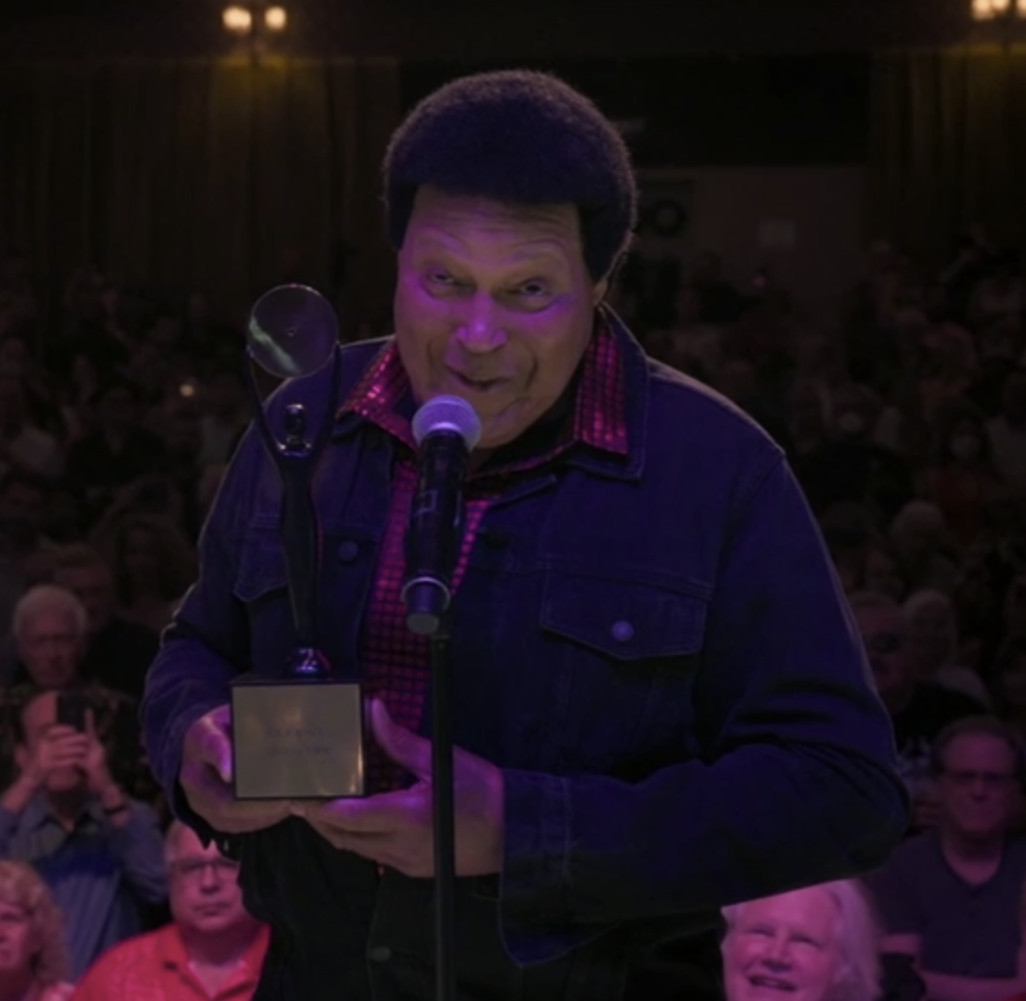
On the night of being recognized with "Music's Highest Honor," Chubby Checker was not at the induction ceremony accepting the ultimate lifetime achievement award, the type of validation he had been seeking most of his life. No, he was just a short drive up the coast from L.A., supposedly playing a private gig in Santa Barbara. For its part, the Rock & Roll Hall of Fame did their best to act like Checker wasn't even one of the seven Performer inductees this year, effectively cutting him out of promotional materials and reducing his induction segment to a bare minimum of 4 1/2 minutes, compared to the typical 25-30 minutes reserved for other Performers. There was no presenter speech and no live tribute performance.
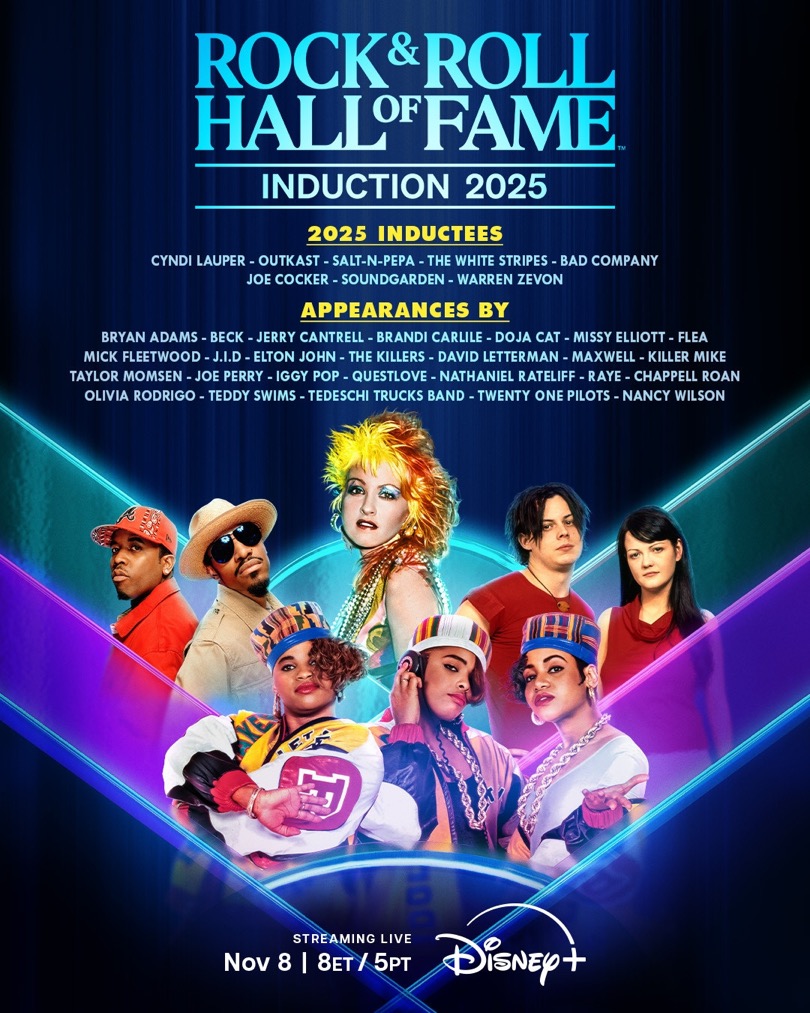
During his brief induction video, there was a single narrator: Chubby Checker. The Rock & Roll Hall of Fame left it to Checker alone to explain his impact on the culture and why he deserved this recognition. Unlike most other tribute videos, there were no peers lauding his achievements nor any contemporary artists gushing about how they were influenced by Chubby Checker (there was some brief archival footage of Dick Clark). After 2 1/2 minutes of Checker walking through his history, they showed a video of his acceptance speech from a July concert in Des Plaines, Illinois as he held a trophy that didn't have his name etched on it yet and his face eerily illuminated by rotating stage lighting, alternating between purple, red, and blue.
So how did it come to this? With Chubby not wanting to attend the induction ceremony and the Rock Hall pretending he didn't exist?
Chubby's checkered relationship with the Rock & Roll Hall of Fame goes back to the very first induction ceremony in 1986, where he performed The Twist on stage during the "All-Star Jam."
While Checker was technically eligible for induction that first year, he probably wasn't surprised not to be inducted up against the stacked first class, however he likely never thought his wait would extend decades.
It’s fair to say that Chubby Checker has always believed he belongs in the Hall of Fame with the greats. He isn’t shy about talking about his accomplishments and his impact on music. Take for example some of his claims in recent interviews:
- Muhammed Ali learned his brash boastful personality from him
- He invented “throw your hands in the air like you just don’t care” with his song and dance “The Fly”
- “I take credit for disco.”
- “The dancefloor that so many of these artists enjoy and make millions of dollars on – I put it there.”
- “You should check out the history of television, and see what happened before Chubby Checker and after Chubby Checker did his 2:52 singing 'The Twist' on American Bandstand (on Aug. 6, 1960). The world changed. Music changed.”
- “Hip-hop? What does 'The Pony' do? He hips and he hops! That little dance that people do when they’re holding their crotch? That’s “The Pony.” I started that.”
- “Anyone after Chubby Checker who had a song that you could dance to, they were in my world, that I brought to the dance floor. Dancing to the beat is what we brought, and it’s still there — no matter what it is.”
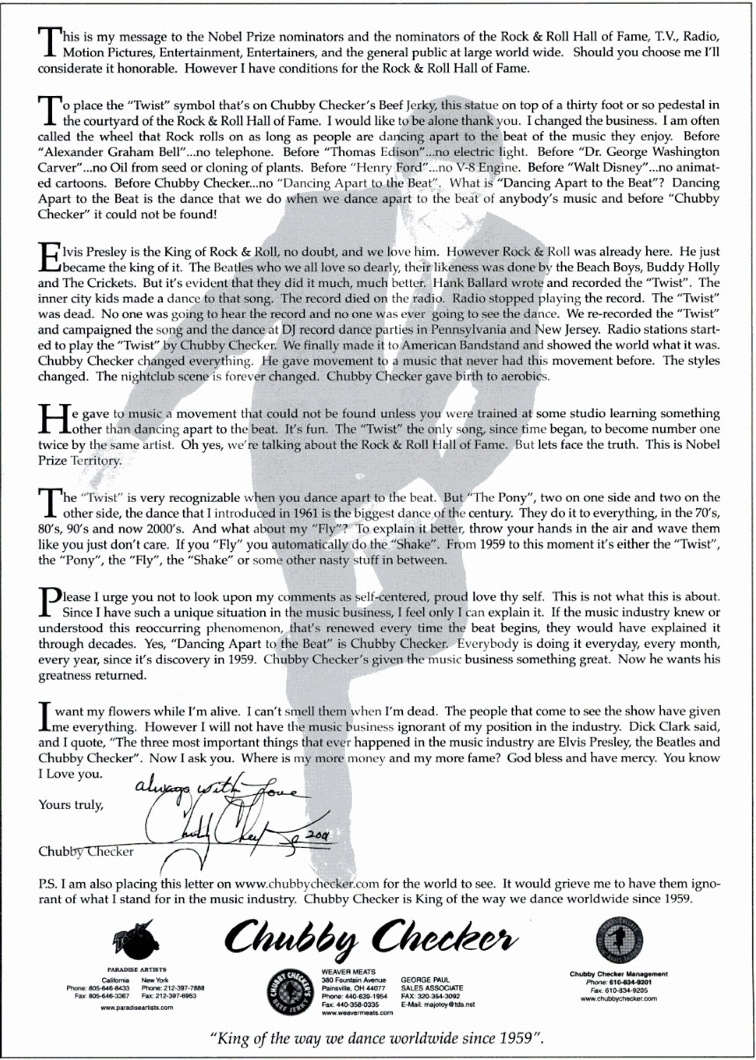
In 2001, after waiting 15 years for the Rock & Roll Hall of Fame to recognize him, Chubby Checker famously took out his first full page ad in Billboard laying out his credentials and demands.
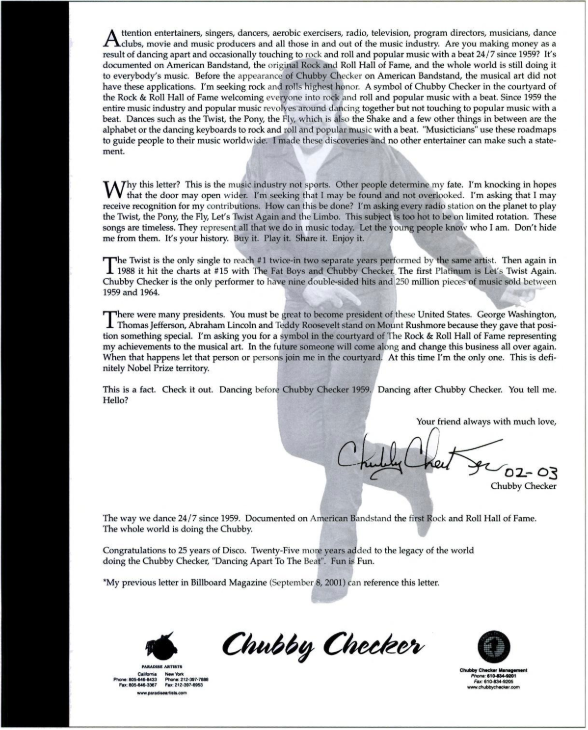
Checker followed up this letter with another one in 2002.
In 2004, Chubby Checker showed up outside the induction ceremony in New York to complain about the lack of radio airplay for "The Twist." Seymour Stein, co-chairman of the Nominating Committee of the Rock Hall at the time, said, “I think that Chubby is someone who will be considered. He has in certain years.”
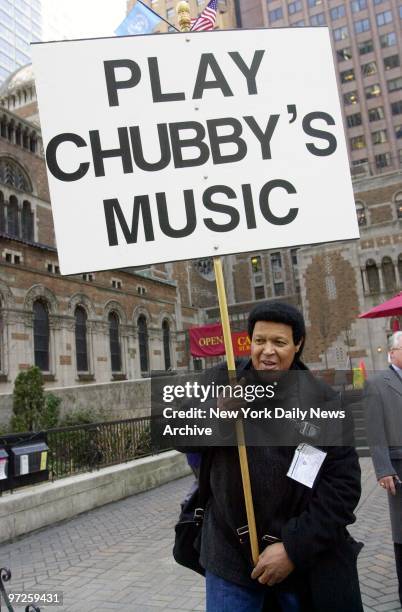
The stunt didn't sway the Rock & Roll Hall of Fame. A decade later in 2014, Checker was asked about why he wasn't inducted yet. Checker responded, "I don't like to say it, but they're racist against the Chub. That's all it is. It ain't nothing else. It's plain and simple. They need to take care of it. Fix it!"
In 2018, the Rock & Roll Hall of Fame thought they had a solution for artists like Chubby Checker. They created the "Singles Category" to specifically honor artists who had impactful songs but weren't in the Hall of Fame (and likely didn't have the full set of credentials usually required). Chubby Checker's "The Twist" was one of five songs in the inaugural class. The new category was revealed at the induction ceremony but the Hall of Fame apparently didn't think it was important enough to invite any of the artists who "won," so Checker still never received any in-person validation from the Hall of Fame.
The Singles Category was discontinued after three years and most people thought artists who were honored in that category would never be fully inducted. However, in 2023, the Hall of Fame inducted Link Wray in the Musical Influence category, giving new hope to other Singles Category honorees.
In 2025, when Performer ballot was announced, it was genuinely shocking to see Chubby Checker as one of the names. Why now, after 40 years of eligibility had the Rock & Roll Hall of Fame suddenly changed its mind about the Hall of Fame worthiness of one of the most famous artists of his generation? Why did Nominating Committee member Cliff Burnstein, a 14-year veteran of the process, decide this was the year to put forward Chubby Checker? We may never know the answers to those questions, but former members of the committee that skipped over Chubby all those years have been pretty clear why he was kept off the ballot.
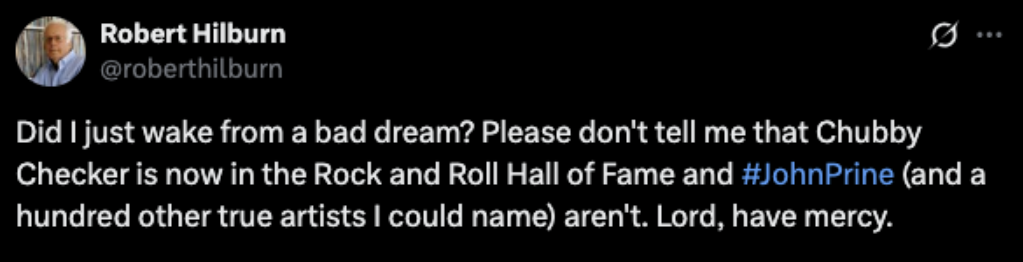
A few years ago, on the "Who Cares About the Rock Hall?" podcast, Seymour Stein had this to say about him:
Seymour Stein: “I don’t believe that Chubby Checker was a great artist. Do you really think he was a great artist?”Andy Paley: “There are lot of people that aren’t great artists in the Rock & Roll Hall of Fame.”
Stein: “Why repeat it with Chubby Checker?”
The Rock & Roll Hall of Fame's standards have shifted over the years, notably with the turnover at the top of the organization from Jann Wenner to John Sykes. Artistry and critical acclaim are no longer the primary factors for induction (some perceived this as snobbery). Those have been replaced with popularity and industry connections. So under the current lens, Chubby Checker's nomination fits right in (with an emphasis on popularity and how much weight you put on creating dance fads) in this new populist era.
But why did Chubby Checker choose to skip the ceremony, where he would finally get the flowers he's been wanting for 40 years? Was it bad blood or cold feet? Based on Checker's induction speech from Des Plaines, it seems like was genuinely touched by the honor. His preemptive move to book a gig on the day of induction seems like a move of someone who was afraid they would be hurt once again.
The Rock & Roll Hall of Fame's reaction to Chubby Checker snubbing them, was to act like they regretted ever having caved in the first place.
Now both parties can go their separate ways and never have to think of each other again. They leave in their wake one of the more fascinating and puzzling Rock & Roll Hall of Fame inductions ever.
Chubby Checker is Skipping the Rock & Roll Hall of Fame Induction Ceremony
On Sunday, in a surprise announcement at a concert in Des Plaines, Illinois, Chubby Checker accepted his trophy, gave a brief speech to Rock & Roll Hall of Fame cameras, then launched into "The Twist." Checker later sat down for an interview where he explained he will be skipping the induction ceremony in November because he prefers to play in front of a "live audience, not a television audience."
After 39 years of being snubbed by the Hall of Fame, Checker decided to turn away from their embrace.
Chubby Checker is skipping the Rock & Roll Hall of Fame induction ceremony (h/t @rockinretropod.bsky.social )
— Future Rock Legends (@futurerocklegends.com) July 29, 2025 at 12:17 AM
…more to come
[image or embed]
Here’s more of Chubby Checker’s explanation for skipping the Rock & Roll Hall of Fame induction ceremony
— Future Rock Legends (@futurerocklegends.com) July 29, 2025 at 9:07 AM
[image or embed]
Checker's announcement comes after he was finally nominated for the first time and inducted in his 40th year of eligibility, after spending years publicly talking about his absence. His explanation is a bit convoluted, but it sounds like after he was nominated in February, he asked his manager to book him a gig specifically on the night of the induction ceremony. Checker said, "Let's be doing a show, like I am doing today, to show that I'm alive and well… And my dream is still being fulfilled, and the Rock & Roll Hall of Fame is happening all at the same time."
There isn't any precedent for an inductee publicly receiving their trophy away from the induction ceremony, particularly three months prior to the event. Rock Hall production cameras were on hand to record Chubby's speech from the stage after he accepted his trophy.
What a surprise! If I'm holding this, it means that Chubby Checker has been inducted into the Rock & Roll Hall of Fame. How about that?
I thank all of my peers who have elected me, and all of my wonderful fans of all this time, I appreciate you so much. The Rock & Roll Hall of Fame, I thank you for making me a member of the family. When I go through Cleveland in the car, I'll think totally different than before, because a light has gone on in my life. When I'll go through Cleveland, I'll just be illuminated by all the good things that have happened to me in my lifetime. I am so thankful, I appreciate it, and I can't say how wonderful it is that this has happened to me and I'm alive to enjoy it!
And it all began with this…. "C'mon baby!, Let's do the Twist!"
Checker joins Carol Kaye in deciding to skip the L.A. ceremony. Additionally, Bad Company's Mick Ralphs passed away in June leaving Simon Kirke and Paul Rodgers as the last living members who are being inducted. Sadly, this year's class has seven inductees (Thom Bell, Nicky Hopkins, Warren Zevon, Joe Cocker, Mick Ralphs, Boz Burrell, and Chris Cornell) who have died, leaving Rock Hall producers more segments to fill with tributes.
The ceremony will stream live on Disney+ on November 8th.
Credit to Nick Bambach of the Rock in Retrospect podcast for breaking this story.
The 2025 Rock & Roll Hall of Fame Inductees
The 2025 Rock & Roll Hall of Fame Inductees were announced live during American Idol on Sunday, April 27th. The induction ceremony will be held in on November 8th at the Peacock Theater in Los Angeles.
| Inductee | Category | Group Members |
| Bad Company | Performer | Boz Burrell, Simon Kirke, Mick Ralphs, Paul Rodgers |
| Chubby Checker | Performer | |
| Joe Cocker | Performer | |
| OutKast | Performer | André 3000, Big Boi |
| Cyndi Lauper | Performer | |
| The White Stripes | Performer | Jack White, Meg White |
| Soundgarden | Performer | Matt Cameron, Chris Cornell, Ben Shepherd, Kim Thayil, Hiro Yamamoto |
| Salt-N-Pepa | Musical Influence | Salt (Cheryl James), Pepa (Sandra Denton), DJ Spinderella (Deidra Roper) |
| Warren Zevon | Musical Influence | |
| Thom Bell | Musical Excellence | |
| Nicky Hopkins | Musical Excellence | |
| Carol Kaye | Musical Excellence | |
| Lenny Waronker | Non-Performer |
Future Rock Legends Predicts the 2025 Rock & Roll Hall of Fame Inductees
- Joe Cocker: This should probably become an official rule at this point: If Paul McCartney puts his stamp of approval on your candidacy, you're as good as gold.
- Cyndi Lauper: After playing nice with the Rock Hall the last few years, the Nominating Committee gave Lauper a clear ballot path to induction. Lauper has been the leading vote getter on the Ballot Tracker, appearing on over 75% of known ballots. This should be her year.
- Outkast: Also doing extremely well with voters is the only hip hop artist on the ballot. The Nominating Committee should feel ashamed they made Outkast wait this long. Artists with first-ballot Hall of Fame credentials are increasingly rare, so it's absurd the Hall of Fame is just finally getting around to these legends.
- Bad Company: As has been said many times, they appear to be this year's Foreigner. They have the support of their peers, and they haven't been shy about teasing their appearance at the induction ceremony.
- Chubby Checker: Here's an artist who may benefit from the e-ballot system which will prompt snap judgments from voters who probably think he was already inducted decades ago. A closer inspection of his candidacy would reveal some of the significant limitations in the depth of his career, but how many voters are going to dig deeper?
- Billy Idol: It was a good sign for Idol's chances when he revealed in an early interview after the ballot was released that his longtime collaborator Steve Stevens was included in his nomination. The Rock Hall rarely goes deeper with solo artists, so it showed that either Idol's team or the Hall were already thinking about his induction.
- The White Stripes: Jack White has always venerated the legends that were among the first inductees in the Hall of Fame, and now he has the opportunity to join them. A White Stripes reunion performance would be guaranteed to be a highlight of the ceremony.
- Soundgarden: In the last 10 years, only six artists have been inducted as performers after having been nominated more than three times. Soundgarden should make it in on their third try, with strong showings among public ballots and the fan vote.
Additional Notes:
- What about Mariah? It's hard to leave her out again, but she proved last year that she wasn't too big to fail. Some voters may have softened on her in since last year, but we're predicting it still won't be enough.
- Eight performer inductees again? Last year's high water mark may not be back given the length of last year's ceremony, but we'll see what other priorities the Hall of Fame has in the other categories.
- Joy Division / New Order are one of the most deserving artists on the ballot and yet they will probably miss out again. This is a case where the Rock Hall waited way too long to get them on the ballot and their cultural relevance has faded.
- Phish will win the Fan Vote which will keep them in the annual Hall of Fame conversation for a few years, but their performance in that poll is one of the weakest of any leader in recent history, so the Rock Hall may decide to go in a different fan-friendly direction.
- If Chubby Checker gets in, he'll be the second artist from the defunct Singles Category to be inducted into the Rock Hall proper, after Link Wray did it in 2023.
- The behind-the-scenes PR campaign for Cocker would have been better timed to roll out during the old paper ballot system, when voters had a week or two to wait before having to make their final decisions. Under the new e-ballot system, the majority of voting is probably completed within just a few days after the nominees are revealed. (The Rock Hall should reconsider when they send out official ballots. Waiting a week or two could be beneficial.)
- What do our readers think is going to happen? The results from our own prediction poll:

- The Rock Hall's "Fan Vote" winners were Phish, Bad Company, Billy Idol, Cyndi Lauper, Soundgarden, Joe Cocker, and Chubby Checker.
- For the special categories, we'll predict that Iron Maiden will get forced in as Musical Excellence (with just a video package at the ceremony since they probably won't show up), and Carol Kaye will finally get her due.
- Will the Hall of Fame continue nominating and/or inducting artists just after they die? Maybe? The Rock Hall has shown they don't care how crass it looks and will use the morbid momentum to do what should have been done years ago.
Who do you think will be inducted? Leave your thoughts below.
This post was made available a week in advance for our paid Patreon subscribers. Please consider becoming a member for early posts and exclusive content.
What do you value in a Hall of Famer?
There are a wide variety of artists who have been inducted into the Rock & Roll Hall of Fame, each with a unique set of characteristics that made them stand out from their peers. Those attributes can range from the objective (#1 singles, record sales, Grammy wins) to others that are more difficult to measure (impact, influence, musical excellence).
The Rock & Roll Hall of Fame doesn't provide much guidance about what they believe is most important, so every voter (and fan) creates their own mix of attributes they feel are the most important.
We conducted a poll asking voters to rank the most important attributes. The following are the results of the survey:

The top vote getters are not much of a surprise and are generally accepted as the most important criteria for induction. It's more interesting to see what isn't critical to most people: Grammys and other awards, being great live, and having a radio and chart presence. In recent years, members of the Rock Hall nominating committee have taken to quoting sales numbers or Billboard performance when making the case for artists. Others tend to cite radio airplay as a meaningful metric of importance while ignoring the fact that a handful of corporate media companies control the playlists.
The Rock Hall, under the direction of John Sykes, whose day job is embedded in corporate radio and handing out meaningless industry awards, is demonstrating through their ballots that its values are flipped upside down from what most people want a Hall of Fame to recognize.
Updated with results on April 9, 2025
The 2025 Rock & Roll Hall of Fame Nominees
The 2025 Rock & Roll Hall of Fame Nominees were announced at 6:00am EST on February 12th. Inductees will be revealed in late April, and will be honored at a ceremony in Los Angeles in the fall.
| Nominee | # of Noms | Group Members |
| Bad Company | 1st | Boz Burrell, Simon Kirke, Mick Ralphs, Paul Rodgers |
| The Black Crowes | 1st | Jeff Cease, Johnny Colt, Marc Ford, Steve Gorman, Eddie Harsch, Chris Robinson, Rich Robinson |
| Chubby Checker | 1st | |
| Joe Cocker | 1st | |
| Billy Idol | 1st | Billy Idol, Steve Stevens |
| Maná | 1st | Juan Calleros, Alex González, Fher Olvera, Sergio Vallín |
| OutKast | 1st | André 3000,Big Boi |
| Phish | 1st | Trey Anastasio, Jon Fishman, Mike Gordon, Page McConnell |
| Mariah Carey | 2nd | |
| Joy Division/New Order | 2nd | Ian Curtis, Bernard Sumner, Peter Hook, Stephen Morris, Gillian Gilbert |
| Cyndi Lauper | 2nd | |
| Oasis | 2nd | Gem Archer, Paul Arthurs, Andy Bell, Liam Gallagher, Noel Gallagher, Tony McCarroll, Paul McGuigan, Alan White |
| The White Stripes | 2nd | Jack White, Meg White |
| Soundgarden | 3rd | Matt Cameron, Chris Cornell, Ben Shepherd, Kim Thayil, Hiro Yamamoto |